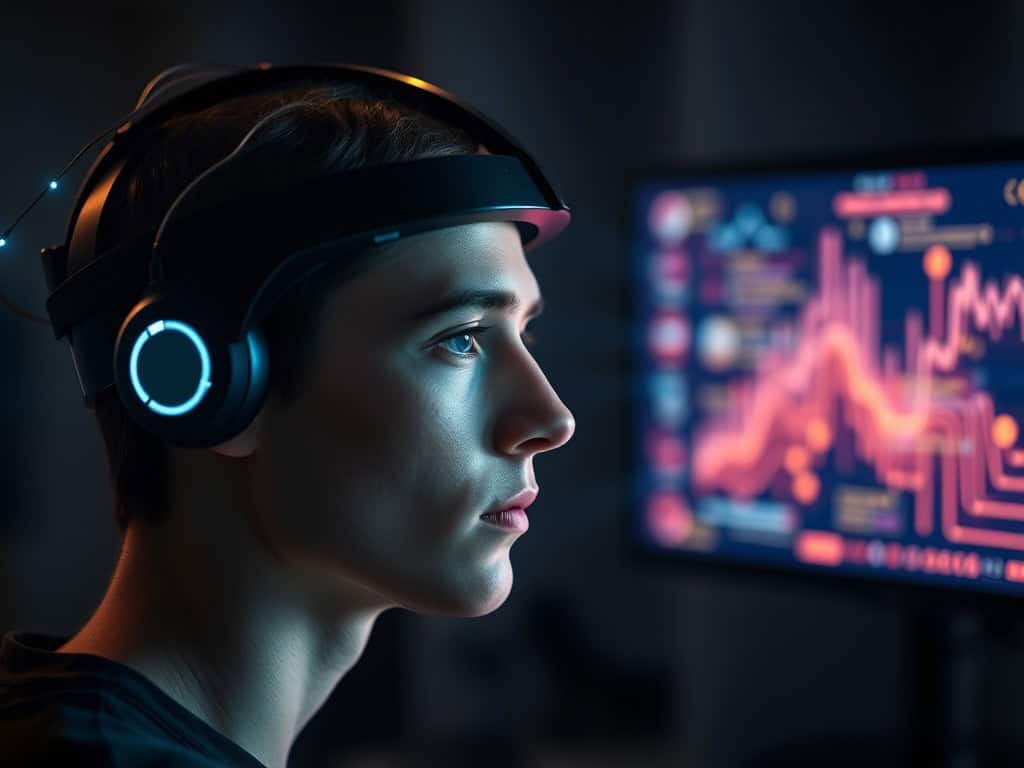
The future of neuroscience and AI is unfolding before our eyes, merging human cognition with artificial intelligence in ways we never thought possible. From brain-computer interfaces (BCIs) to AI-driven mental health solutions and even the concept of digital consciousness, this field is revolutionizing how we understand and interact with the human brain. As technology advances, the boundaries between mind and machine are beginning to blur. But how close are we to a world where thoughts can control devices, AI can predict mental health crises, and human consciousness can be uploaded into machines? Let’s explore the latest breakthroughs, challenges, and ethical concerns shaping the future of neuroscience and AI.
What Are Brain-Computer Interfaces (BCIs) and Why Do They Matter?
Imagine controlling a computer, playing a video game, or even communicating—just by thinking about it. It may sound like something from a sci-fi movie, but brain-computer interfaces (BCIs) are turning this concept into reality. BCIs are systems that create a direct communication link between the human brain and an external device, allowing users to control technology using brain signals alone. These groundbreaking systems eliminate the need for physical movement, making them especially valuable for individuals with paralysis or neurodegenerative disorders.
The future of neuroscience and AI heavily relies on BCI technology because it has the potential to enhance human capabilities beyond medical applications. From controlling robotic limbs to seamlessly integrating thoughts with digital platforms, BCIs are unlocking new possibilities for human-computer interaction. Although full-fledged mind-controlled devices are not yet part of daily life, rapid advancements suggest that we may adopt them widely in the near future.
Click here to learn more about Brain-Computer Interfaces (BCIs).
How Do BCIs Work? The Basics Without the Jargon
At their core, BCIs work by detecting electrical signals in the brain and translating them into commands that a computer can understand. Think of it as Morse code, but instead of tapping out dots and dashes, the brain sends neural signals that the system interprets. There are two main types of BCIs: non-invasive and invasive. Non-invasive BCIs, such as EEG (electroencephalography) headsets, are placed on the scalp to read brainwaves. These are safer but less precise.
Although we have not yet integrated full-fledged mind-controlled devices into daily life, rapid advancements suggest that widespread adoption may happen soon.
For example, if you want to move a cursor on a screen, the BCI learns to recognize the unique neural activity linked to that intention and then translates it into movement. The more advanced the system, the more complex the tasks it can perform.
BCIs in Action: What’s Happening Right Now?
BCIs are no longer just a theoretical concept—they are being actively tested and used in real-life applications. Companies like Neuralink, Synchron, and BrainGate are developing brain implants that allow individuals with severe disabilities to control computers and other devices purely through thought.
In 2023, a paralyzed man regained mobility thanks to a BCI that connected his brain to his spinal cord, allowing signals to bypass the damaged nerves. Another significant milestone occurred when a person with ALS typed messages using only brain-controlled text input, restoring their ability to communicate.
Beyond medicine, BCIs are making their way into gaming, virtual reality, and even productivity tools. Imagine playing a first-person shooter where you fire weapons just by thinking about it—no controller needed. Researchers are also experimenting with mind-controlled drones, smart home automation, and even robotic assistants. Neuroscience and AI promise an even greater integration of BCIs into everyday life, but we must still overcome several hurdles.
The Challenges: Why Don’t We All Have BCIs Yet?
If BCIs hold so much potential, why isn’t everyone using them? The answer lies in technological, ethical, and practical challenges. First, the technology is still in its infancy. While scientists can decode simple thoughts, translating complex ideas and emotions into computer-readable signals is incredibly difficult. Unlike a keyboard, which provides structured input, the human brain produces a vast range of signals that can vary from person to person.
Second, privacy and security concerns pose serious ethical questions. If computers can read your brain signals, who controls that data? Could companies or governments misuse it? Without strong regulations, BCIs could become a tool for surveillance or manipulation. The thought of corporations having access to brain activity data raises red flags for many researchers and ethicists.
Finally, BCI adoption faces practical obstacles. Non-invasive devices are not as powerful as their invasive counterparts, but surgical implantation is not a decision most people would take lightly. Researchers are working on developing safer, more comfortable, and more affordable BCIs, but we’re still a few years away from widespread accessibility.
AI’s Role in Mental Health & Brain Mapping
AI in Mental Health: Your Digital Therapist?
AI is revolutionizing the field of mental health, offering new ways to diagnose, monitor, and even treat psychological conditions. Virtual therapists powered by AI chatbots—such as Woebot, Wysa, and Replika—are already helping millions manage stress, anxiety, and depression. These AI systems analyze user inputs, such as text, voice, and facial expressions, to provide personalized mental health support. They don’t replace human therapists, but they offer an accessible, 24/7 support system for those who might not otherwise seek professional help.
Beyond chatbots, AI is being used to predict mental health crises before they occur. By analyzing speech patterns, sleep habits, and even social media activity, AI models can detect early signs of conditions like depression, bipolar disorder, and schizophrenia. This proactive approach could allow individuals to receive treatment before their conditions escalate.

Brain Mapping: Cracking the Code of the Mind
AI is also playing a crucial role in brain mapping, the process of creating detailed maps of neural activity to understand how different brain regions function. Technologies like functional MRI (fMRI) scans provide real-time images of brain activity, and AI algorithms can analyze these scans faster and more accurately than human researchers. This is leading to breakthroughs in diagnosing neurological disorders such as Alzheimer’s, PTSD, and schizophrenia, often years before symptoms appear.
Deep learning models are also being used to study memory, emotions, and cognitive function, helping scientists better understand how we learn and process information. The ability to predict how a patient’s brain might respond to specific treatments could lead to more personalized and effective therapies.
Ethical Concerns of Human-AI Merging
As neuroscience and AI become increasingly intertwined, ethical dilemmas arise. If AI chips were integrated into human brains, who would control the technology—the individual or the company that created it? Could governments use BCIs to monitor and manipulate thoughts? These concerns highlight the urgent need for regulations to ensure that AI remains a tool for empowerment rather than control.
Another major concern is the potential for social inequality. If AI enhancements can improve intelligence and physical abilities, would only the wealthy have access to these benefits? This could create a new class divide, where enhanced individuals dominate key industries, while the rest of society is left behind.
If you want to learn more about Tech Rivalry: The Battle for Science and Research Innovation
The Future of Memory Upload & Digital Consciousness
The concept of uploading human consciousness into a digital format is one of the most futuristic—and controversial—ideas in the future of neuroscience and AI. Some scientists believe that BCIs could one day store and transfer neural activity, essentially creating a digital backup of a person’s mind. This raises profound philosophical questions: Would an uploaded consciousness truly be “you,” or just a high-tech copy?
While companies like Neuralink and OpenAI are exploring these possibilities, digital immortality remains a theoretical concept rather than a practical reality. Even if scientists develop the ability to preserve human thoughts and emotions in a machine, it’s unclear whether the resulting digital self would possess genuine self-awareness.
Final Thoughts: Where Is the Future of Neuroscience and AI Headed?
The future of neuroscience and AI is both exciting and uncertain.BCIs are bringing us closer to mind-controlled technology, AI is transforming mental health treatment, and researchers are actively exploring digital consciousness. However, we must address ethical and technological challenges before these advancements become mainstream. As we move toward a world where humans and AI merge more seamlessly, the decisions we make today will shape the future of human intelligence, identity, and existence itself.